Landscape StoriesMarch 15, 2026– 8 min read
The Burren: a land of stone
Landing here? This was posted in the Burren Stories & Articles, a section of The Burren Light & Land Irish landscape photography project.
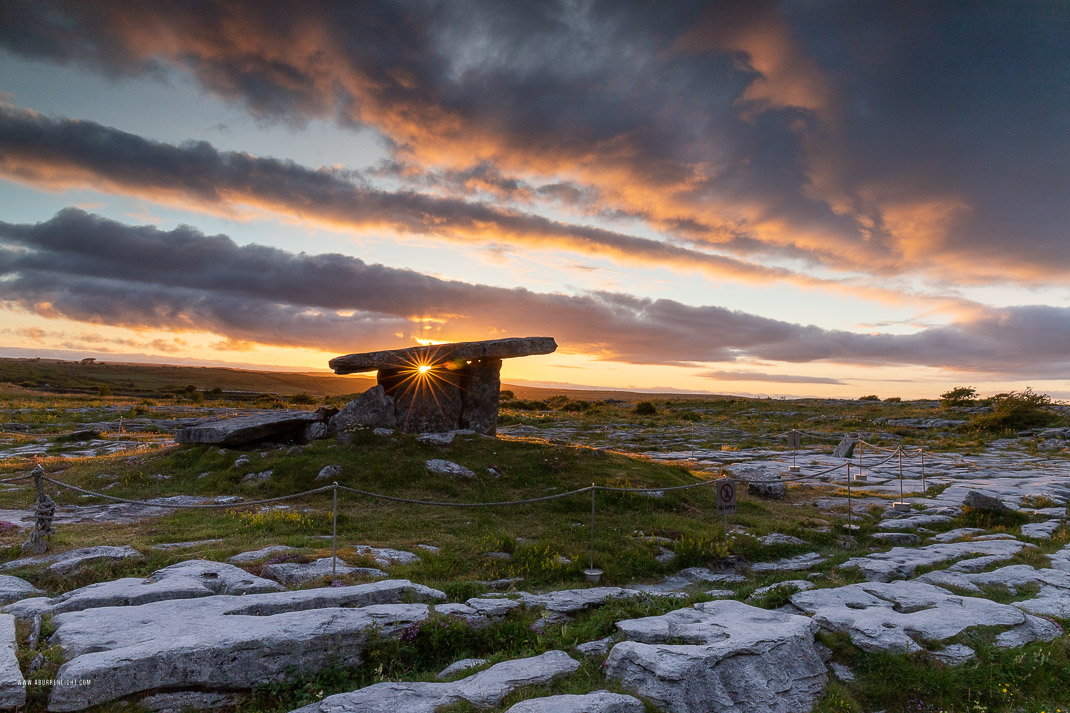
The geology of the Burren
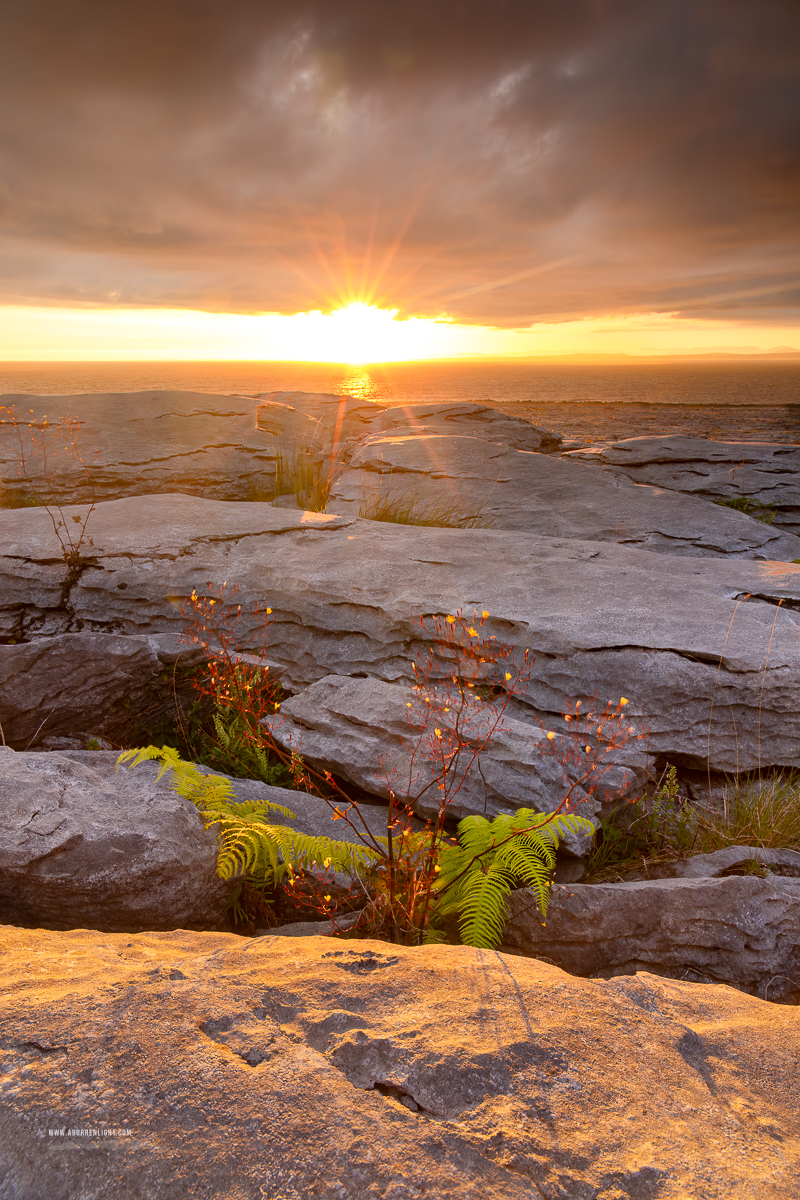
Most visitors will remember the Burren as a puzzle of stone. From a distance the hills look pale and worn, almost bleached by weather and time. Up close the surface reveals itself as limestone pavement, broken into some great slabs separated by deep cracks known locally as grykes. The slabs themselves are called clints, and together they form the distinctive karst landscape that defines the Burren, a part of County Clare.
These rocks were formed more than three hundred million years ago when this corner of Ireland lay beneath a warm tropical sea. Layer upon layer of marine sediments slowly compacted into limestone, trapping the remains of ancient sea creatures in the process. Today small fossils can still be found embedded in the stone, reminders of that long vanished ocean - Great examples can be found at Flaggy Shore or on the slopes of Mullaghmore, in the Burren National Park.
The shaping of the Burren we see today came much later. During the last Ice Age vast glaciers moved slowly across the region, grinding the limestone surface and stripping away soils that might otherwise have softened the terrain. When the ice retreated it left behind a bare and fractured landscape where rainwater could easily seep into the rock. In place, some erratics, big rocks which found a resting place on the land, after the ice melted out. Over thousands of years the water dissolved the limestone along its natural joints, widening the grykes and carving out caves and underground streams beneath the hills.
Walking across the pavement today, one becomes aware of how alive the stone still is. Rainwater gathers in the cracks, small plants find shelter in the sheltered crevices, the surface of the rock carries the marks of weather and time.
The landscape
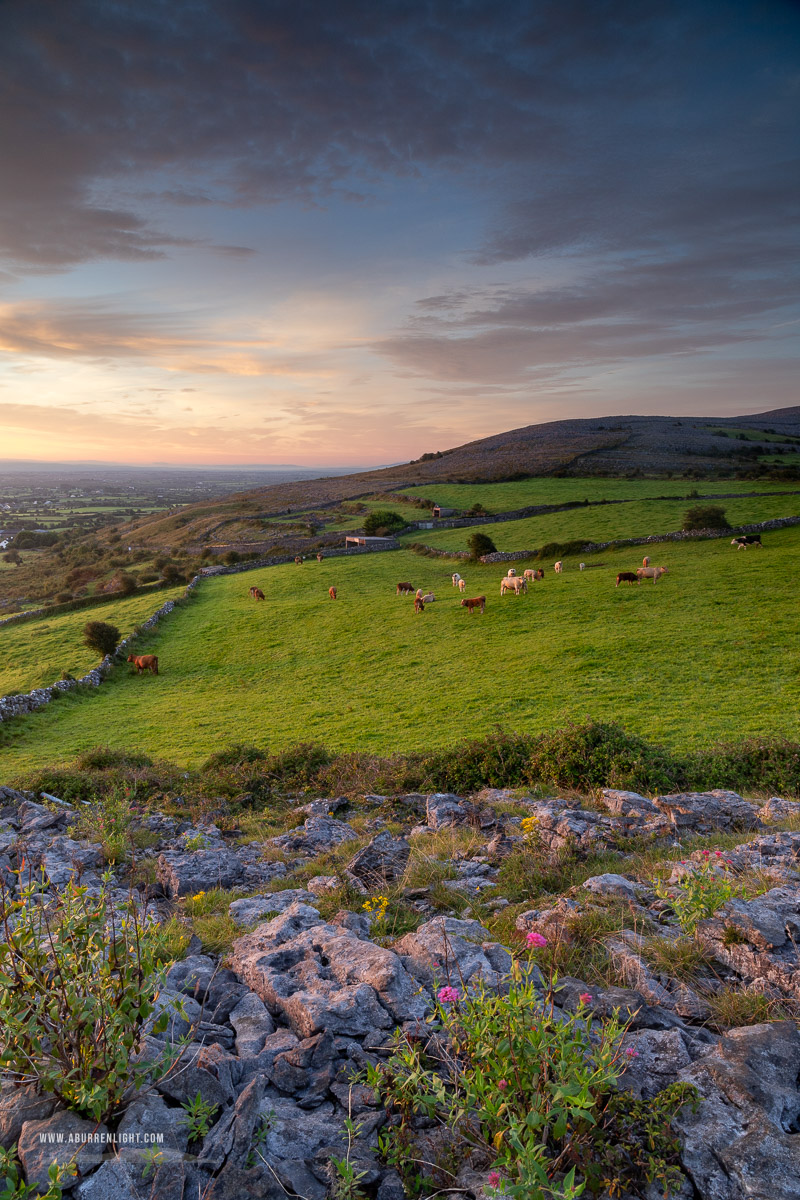
At first glance the Burren can seem bleak. The hills are smooth and rounded, their surfaces a patchwork of grey limestone and thin grass. Trees are scarce, the land feels open in a way that is unusual in Ireland.
Yet the longer one spends there, the more subtle the landscape becomes. Between the slabs of limestone small pockets of soil collect, and in these sheltered places an extraordinary variety of plants grow. In spring the ground brightens with wildflowers. Alpine species that normally belong in colder climates sit beside Mediterranean plants more often associated with southern Europe. The Burren’s geology has created countless small micro climates, each one offering protection from wind and frost.
There is a quiet rhythm to the place: dry stone walls stretch across the hills, guiding the eye through the land, livestock move slowly across the slopes, often dotting the land with a multitude of small marks against the greener pasture. If you are lucky, you can spot a herd of feral goats! When clouds drift across the sky their shadows travel gently over the limestone ridges, giving the landscape a sense of slow movement, with light playing an important role here.
The pale stone reflects light in a way that softens the hills, particularly in the early morning or late evening. On calm winter days, the Burren feels silent, the wide horizon and open ground creating a sense of space that is both peaceful and slightly otherworldly. There is so much peace admiring our sun rising from the shores of Lough Gealáin, at the foot of Mullaghmore in the Burren National Park. These are the conditions I try to capture in my photographs — quiet moments where the landscape feels almost suspended in time: what draws me into the Burren and never has me bored, as I share in Irish Landscape photography - from Donegal to the Burren: Ireland beyond the postcards .
The coastline
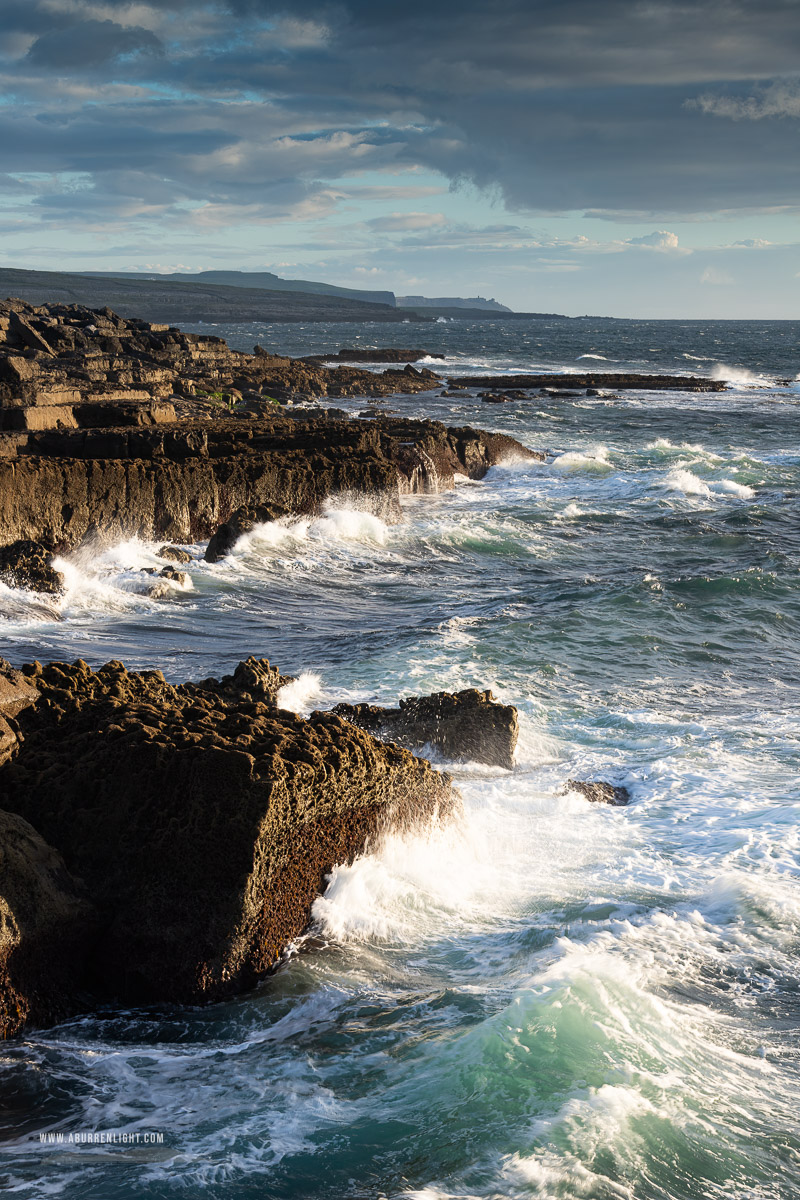
Where the Burren meets the Atlantic Ocean the landscape changes character again. The limestone hills fall away toward the sea, forming a rugged coastline of cliffs, rocky bays and scattered headlands.
The Cliffs of Moher stand as the most dramatic expression of this meeting between land and ocean. Rising steeply from the water, the dark cliffs stretch for kilometers along the coast, their layered rock faces revealing the geological history of the region. Far below, waves roll in from the Atlantic, breaking against the base of the coastal walk.
Further north the coastline becomes quieter and more varied: small harbours and rocky inlets appear between stretches of limestone shore, guarded in ancient time by the old Martello towers erected by the British Empire to defend from French invasions.
Standing along this coast it is easy to feel the influence of the ocean. Atlantic weather arrives quickly, bringing shifting cloud and changing light. One moment the sea lies calm and reflective, and the next a strong wind moves across the water, shifting clouds, darkening the ocean surface and sending waves toward the land.
Human marks on the land
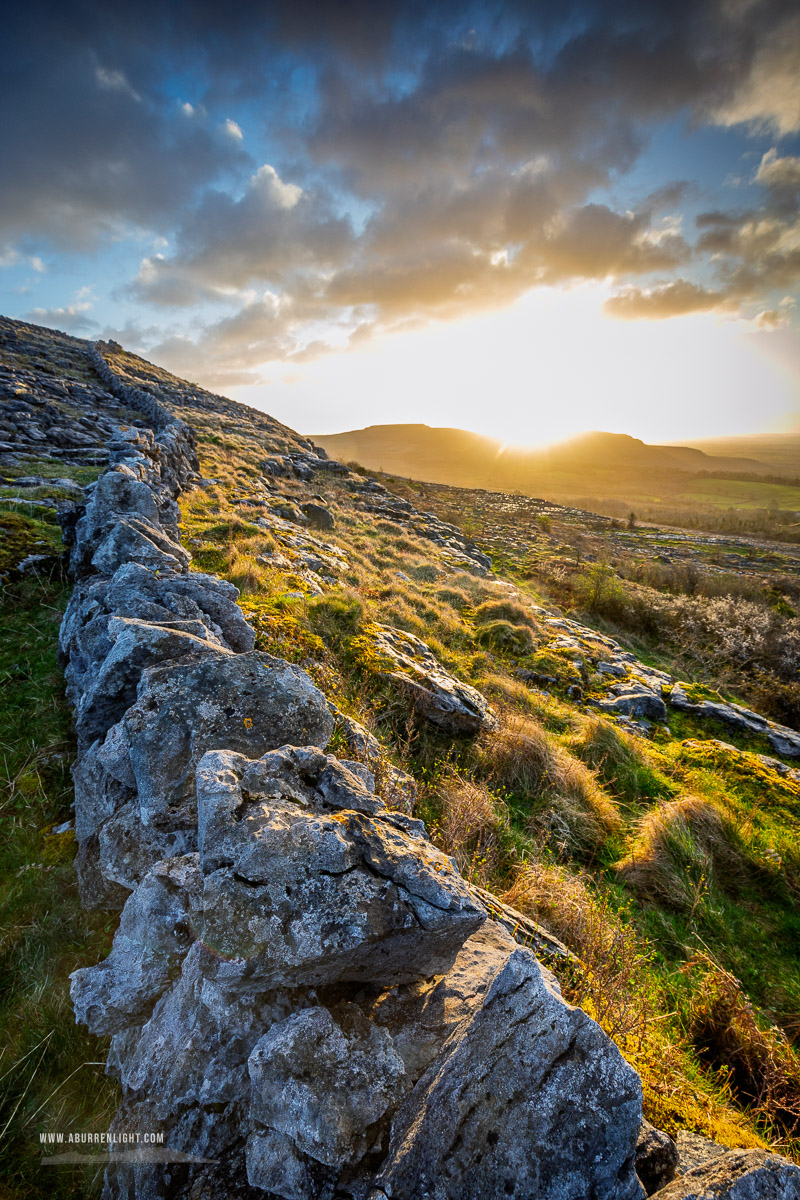
Although the Burren often feels wild and relatively untouched, people have lived and worked in this landscape for thousands of years. Their presence can be seen in the many small marks scattered across the hills and the lowlands.
Dry stone walls are perhaps the most visible of these. Built without mortar, the walls follow the natural lines of the land, dividing fields and guiding livestock across the limestone slopes. Many of them have stood for generations, maintained by farmers who continue to work the land much as their ancestors did.
Traditional farming practices have shaped the Burren in a unique way. During the winter months cattle are often allowed to graze on the hills where the limestone pavement provides natural drainage and shelter. This is known as the winterage, a practice preventing hazel scrubs and woodland from taking over the landscape and also helps preserve the open character of the Burren that visitors recognise today.
Scattered across the hills are also the remains of old farmhouses, field systems and small roads that once connected isolated communities. Some are little more than low stone outlines now, slowly blending back into the land from which they were built.
These human traces do not dominate the Burren. Instead they seem to sit within the landscape, part of the same slow rhythm of stone, grass and weather.
From the Neolithic to the present

The Burren has been home to people for a very long time. Evidence of early settlement can be found in the many archaeological sites that dot the region, some dating back more than five thousand years.
One of the most striking reminders of this ancient past is Poulnabrone Dolmen, a Neolithic portal tomb that stands on the limestone pavement like a simple stone doorway. Built from large slabs of rock, the tomb once formed part of a burial site used by early farming communities who lived and worked in the surrounding land.
Across the Burren there are also ring forts, wedge tombs, early Christian churches and medieval tower houses! Each of these structures tells a small part of the story of the people who lived here and adapted to the demanding landscape. There are many remains of past civilisation on Roughan Hill, in the highland. Much of these sit on private land, cattle territory, please keep your dogs on leach and be wary of cows protecting their calf.
Over the centuries communities farmed the hills, built villages and created the field systems that still shape parts of the Burren today. While many of the older settlements eventually declined or moved elsewhere, the marks they left behind remain visible among the limestone ridges and grassy valleys.
Standing in the Burren today you can feel the depth of that history. The stone beneath one’s feet has existed for millions of years, while the monuments scattered across hills and lowlands are proof of human lives stretching back thousands more. Together they form a landscape where geology, nature and history are closely woven together.
In quiet moments, particularly when the evening light settles across the limestone hills, the Burren can feel timeless. The land appears much as it has for generations, shaped by ice, weather and the careful presence of those who have lived within it.
Going further: some photography focused overviews of the Burren
Discover the photography collection! Portfolio and Limited Editions fine art prints selling & shipping worldwide.
More visual pages to bring you deeper into the Burren Light & Land project: