Photography GuidesSeptember 3, 2026– 5 min read
The National Park: small but mighty!
A story posted in the Burren Stories, a section of the The Burren Light & Landphotography project. New to the Burren? Start here.
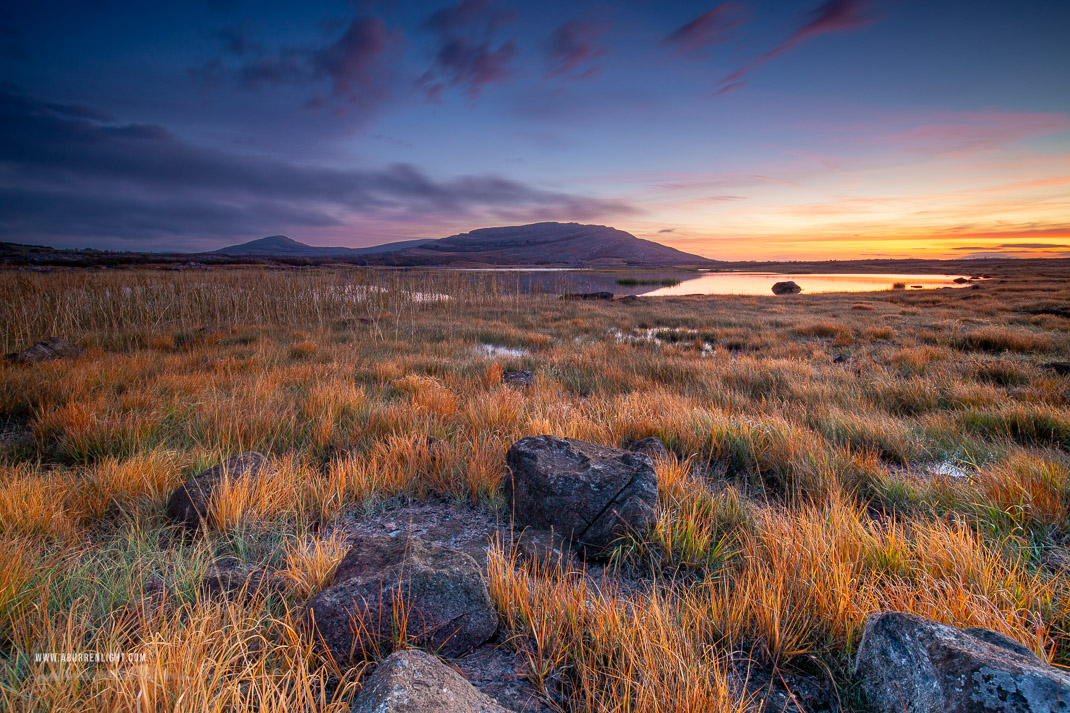
It occupies around 1,500 hectares in the south-eastern corner of the Burren in County Clare, centred on the wonderfully distinctive limestone hills of Mullaghmore and Knockanes and the lower ground around Gortlecka and Knockaunroe. Although only a small part of the wider Burren, the smallest National Park of Ireland brings together an extraordinary variety of landscapes: terraced limestone hills, exposed pavement, hazel scrub and woodland, open grassland, turloughs, wetlands and small lakes.
For the landscape photographer, this is classic Burren country, where bare limestone, water, shifting weather and an enormous western sky can completely transform the same view within minutes; while at a smaller scale, the pavement and grasslands offer equally rewarding opportunities to photograph the remarkable Burren flora, with tiny wildflowers and orchids appearing in the grikes and among the stone from spring into summer. If you are equipped with a drone, don't miss the elevated shot over Mullaghore, Knockanes and beyond! Sunrise is probably the best time to catch some golden light in the frame.
The Burren National Park
Mullaghmore
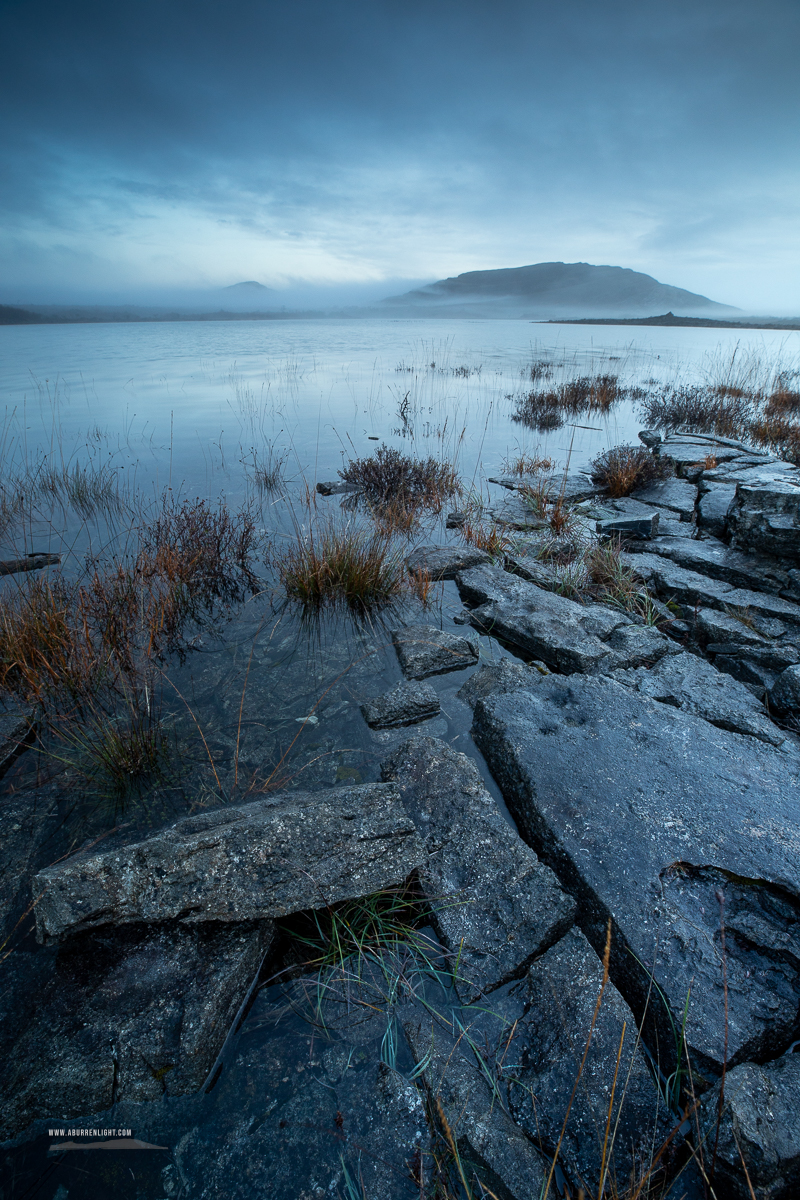
Mullaghmore is impressive. I know I know, it's 'just' a hill! But, what a hill. If there was ever a place filled with magical vibes for me in the Burren, this would be it.
I remember scouting the land for locations in the first year of the project, then driving to Mullaghmore and set my tripod on the edge of lough Gealan, admiring that hill, the twilight hues around, reflecting into the cold water in from of me, on a freezing winter morning. That eery silence, seldom interrupted by the chirping of a bird, this beautiful, layered hill, with Knockanes on the left hand side, pointing to the sky. Winter is best if you don't like the sun in your composition, but really any time of the year is an enchanting experience although I do prefer when the lough hasn't dried up as it would have, most summers. With a bit of luck, mist rises from the lough, Mullaghmore reflects into the calm water and you managed to catch some great limestone foreground for your composition.
Do take the walking trail to the top and walk around the left flank, the view is fabulous from the top! Ensure you bring some rain gear as, would you believe, I got absolutely drenched up there or going down on several occasions.
Knockanes
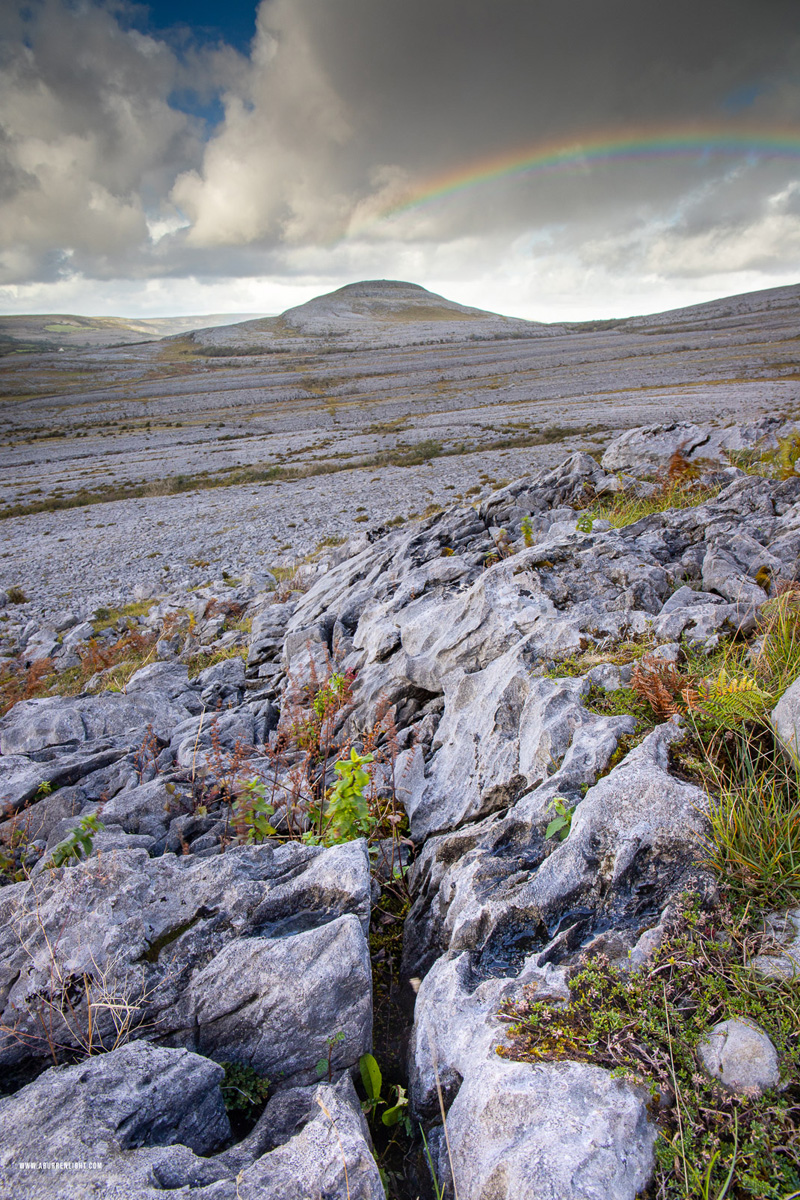
It wouldn't look it but from its 207m, Knockanes is actually the highest point within the National Park. Although it is different in shape from its neighbour Mullaghmore, it's actually part of the same geological formation. Knockanes and Mullaghmore are geological outliers at the southeastern edge of the main Burren limestone plateau with strongly bedded limestone creating terraces and steps, so characteristic of this part of the park.
I think Knockanes works particularly well as part of the shape of the National Park: using its terraces as a backdrop, with pavement and grassland lower in the frame. From lower ground, a longer focal length can compress those layers beautifully and make the limestone terraces much more pronounced. Here, texture matters more than fireworks! Low, side morning light beaming on the hill, or evening light travelling across the limestone should reveal every shelf and fold on and around Knochanes and Mullaghmore. It's also working particularly great with mist rising from lough Gealan, wrapping up the base of the hill and giving a mysterious edge to the landscape.
If you can spare the time and you are fond of geology and fossils, this area teams with fossils of coral and all sorts! There used to be an ocean and a glacier here and both these left a lot to be discovered for whoever has an eye for details and a passion for old stones.
A world of erratics
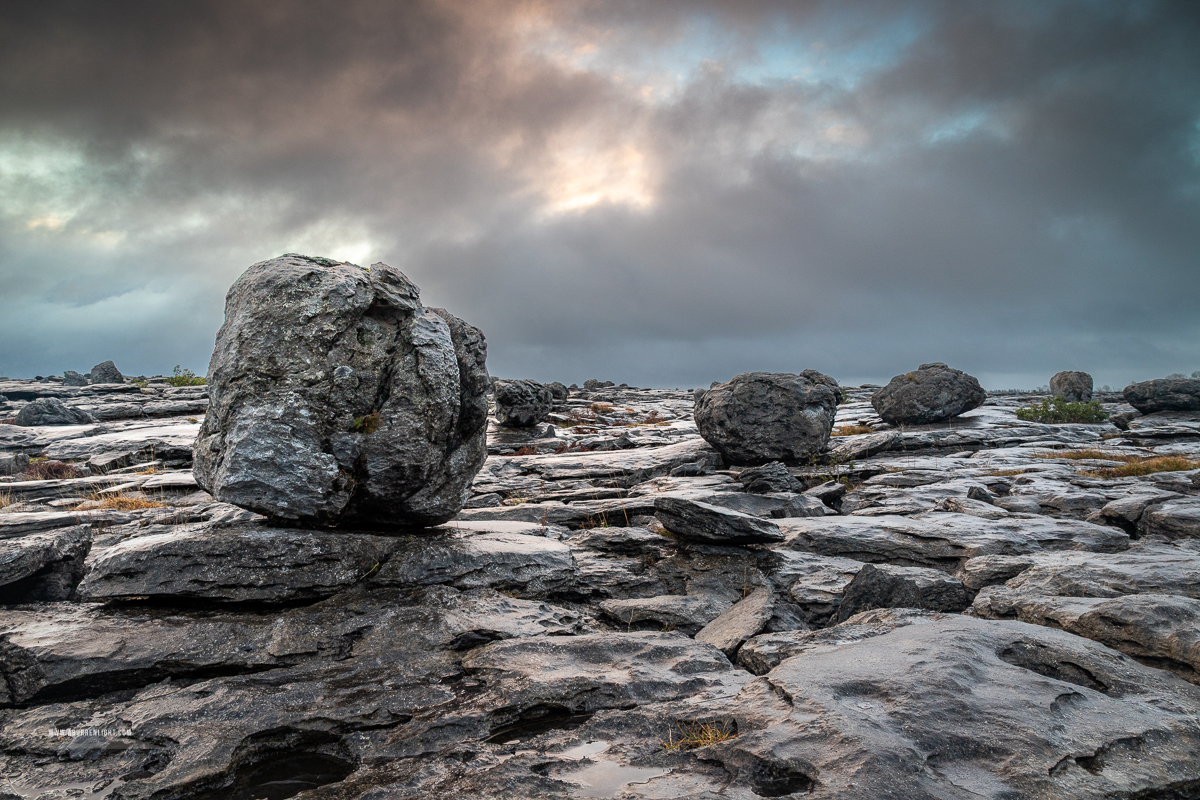
Between Creehaun and Cooloorta, the limestone pavement becomes littered with enormous boulders, some sitting so improbably on the bare rock that they look as though somebody simply forgot to take them away. These are glacial erratics, picked up and carried by the great sheets of ice that once moved across the Burren before being abandoned as the ice finally melted.
Most are limestone which may have travelled from elsewhere in the Burren, although granite carried from the Galway and Connemara region can also be found in the glacial deposits here. Some of the boulders may originally have been surrounded by boulder clay and smaller debris which gradually disappeared through erosion, leaving the great stones standing proud on the pavement.
Photographically they are fabulous subjects: isolated against the limestone they give scale to an otherwise difficult landscape, while low side light brings out every crack, scar and texture. Mist is even better — but then again, I would say that! I once caught them with the aurora over our heads and I can say it was an experience to remember. The erratics of the Burren
Discover the photography collection! Portfolio and Limited Editions fine art prints selling & shipping worldwide.
Following on related topics, some visual pages to bring you deeper into the Burren Light & Land project.